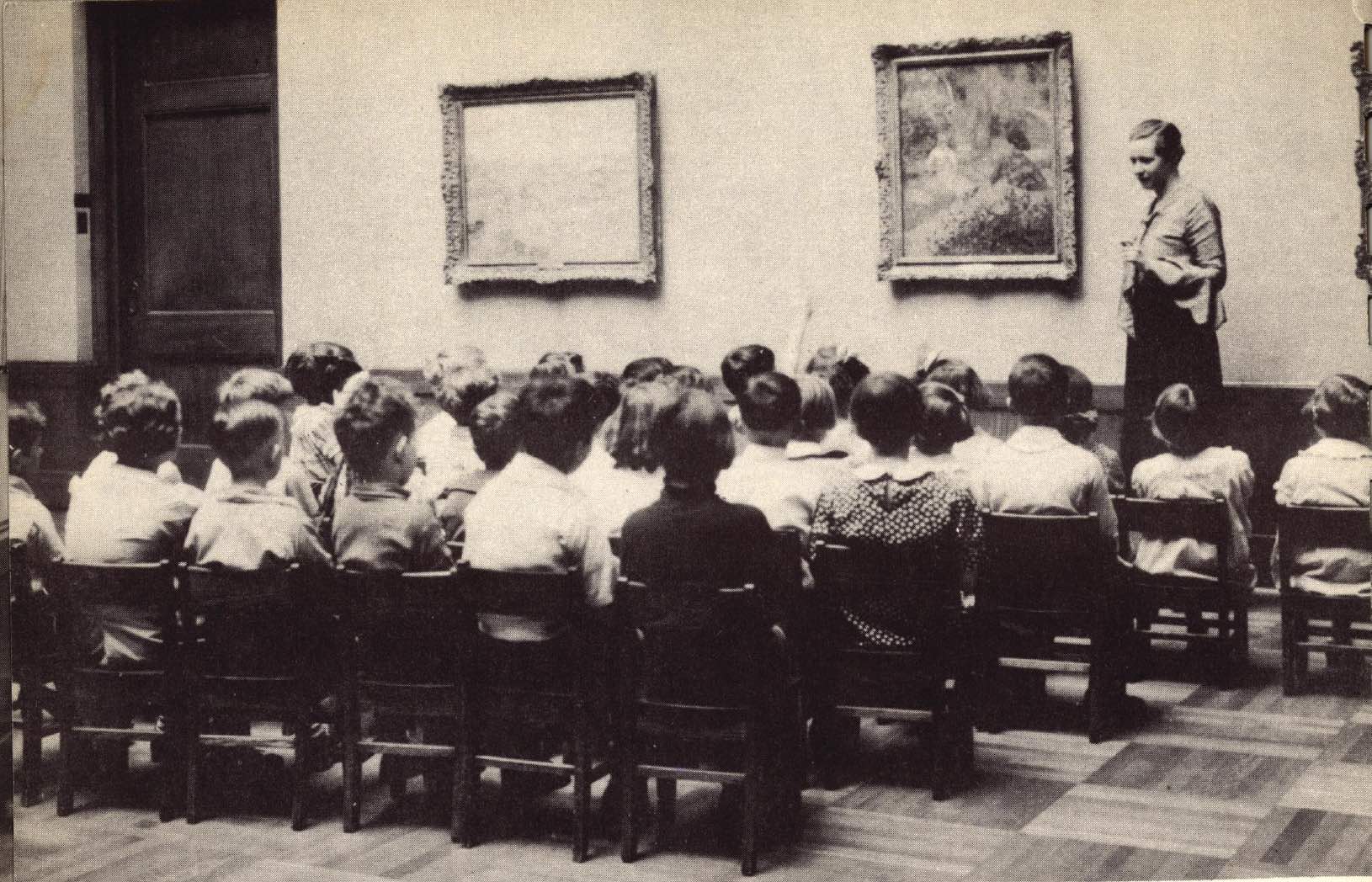
In a 1937 publication titled The Museum Educates, The Toledo Museum of Art claimed to have been the first in the world to be child-centered. The creative child, who is spontaneous, naive, and curious (the several layers of colonialities in the reactivation of a primitivist view of the child) was said to be not only the most appreciated educational target, but the easiest too.
"As early as 1903 it was revolutionary to accepted museum policies of that day, in that it recognized children as the personalities most important to contact. Children are naturally our most responsive public, their minds are most plastic, and their preconceived notions the fewest. Their education is most economical in time and effort due to their eagerness, their spontaneity, their lack of self-conscious fear, and the absence of other pressing interests. Their curiosity counts no cost of learning and doing and looking about them. We offer the child the opportunity, unlimited by fees for entrance or membership."
Since the 1890s, museum education, mainly through the figure of the docent (educator) and public lectures, was essentially directed at adults. In the first decades of the 20th century, with the new vision of the child as the citizen of the future, educational programs directed to schools and children, started to emerge. Not free of doubts! After all, contact with the artworks was thought as elevating the child's soul and imprint good taste, but also as potentially spoiling their natural creativity.
The picture is part of The Museum Educates publication, and the connections between museum and school are evident, as this picture is also a picture of the whiteness of the art museum and the 'white' female art educator.
CM